
Freight class is a standardized classification system used by LTL (less-than-truckload) carriers to determine shipping rates. If you ship freight or haul LTL, you need to understand freight class. Getting it wrong means bill corrections, reclassification fees, and higher-than-expected invoices.
What Is Freight Class?
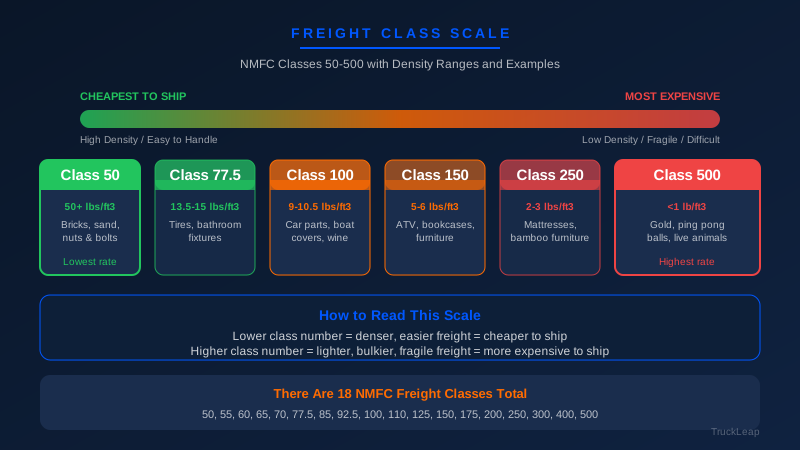
Freight class (also called NMFC class) is a number assigned to every shipment that determines how difficult and expensive it is to transport. The National Motor Freight Classification (NMFC) system, maintained by the NMFTA (National Motor Freight Traffic Association), defines 18 classes from 50 to 500.
Higher class = more expensive to ship.
The 18 NMFC Freight Classes
| Class | Density (lbs/cu ft) | Relative Cost | Examples |
|---|---|---|---|
| 50 | 50+ | Lowest | Bricks, steel, hardwood floors |
| 55 | 35–50 | Brick, mortar, cement | |
| 60 | 30–35 | Car parts, aluminum | |
| 65 | 22.5–30 | Bottled beverages, car accessories | |
| 70 | 15–22.5 | Food in boxes, auto engines | |
| 77.5 | 13.5–15 | Tires, bathroom fixtures | |
| 85 | 12–13.5 | Crated machinery, cast iron | |
| 92.5 | 10.5–12 | Computers, monitors | |
| 100 | 9–10.5 | Boat covers, car covers | |
| 110 | 8–9 | Cabinets, wooden furniture | |
| 125 | 7–8 | Small household appliances | |
| 150 | 6–7 | Auto sheet metal, couches | |
| 175 | 5–6 | Clothing, couches | |
| 200 | 4–5 | Auto sheet metal, aircraft parts | |
| 250 | 3–4 | Bamboo furniture, mattresses | |
| 300 | 2–3 | Wood cabinets, table saws | |
| 400 | 1–2 | Deer antlers, ping pong balls | |
| 500 | under 1 | Highest | Gold dust, bags of currency |
Use our free Freight Class Calculator to calculate your shipment's class instantly.
How Freight Class Is Determined
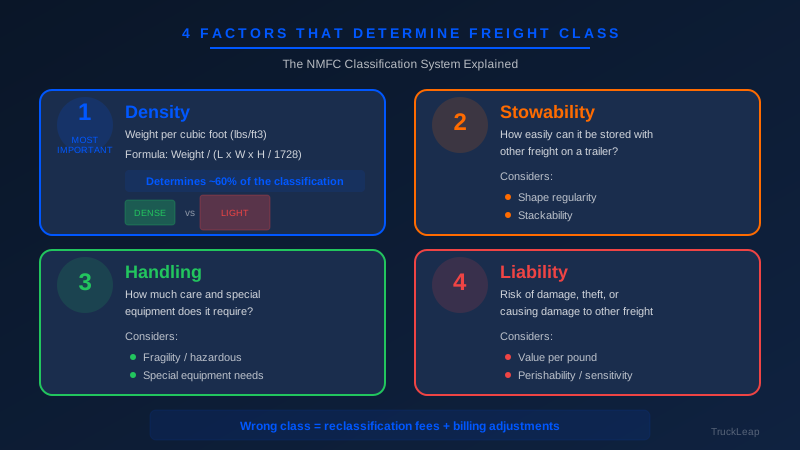
Freight class is based primarily on density (weight per cubic foot) but also considers four additional factors:
1. Density (Primary Factor)
Density = Weight (lbs) ÷ Volume (cubic feet)
Volume = Length × Width × Height (inches) ÷ 1,728
Higher density = lower class = cheaper to ship. Dense freight takes less space per pound, making it more efficient for carriers.
Example: A pallet of bricks weighing 2,000 lbs measuring 48×40×48 inches:
- Volume = (48 × 40 × 48) ÷ 1,728 = 53.3 cu ft
- Density = 2,000 ÷ 53.3 = 37.5 lbs/cu ft → Class 55
2. Stowability
How easily can the freight be loaded with other freight? Hazardous materials, oversized items, or oddly-shaped shipments that can't be stacked with other freight get higher classes.
3. Handling
Freight that requires special equipment or extra care to load and unload (fragile, hazardous, or very heavy) gets a higher class.
4. Liability
High-value freight, or freight prone to theft or damage, carries a higher class.
Commodity-Specific NMFC Numbers
Some commodities have fixed NMFC item numbers that override the density-based calculation. Carriers look up these numbers in the NMFC tariff book.
For example, "Furniture, NOI" (Not Otherwise Indicated) has a specific NMFC number with class rules that may differ from pure density calculation.
If you're shipping a specific commodity repeatedly, look up its NMFC item number to make sure you're using the correct class.
What Happens When the Carrier Reclassifies Your Shipment
If the carrier weighs and measures your shipment and gets a different density than you declared, they will reclassify it. This results in:
- A bill correction at the higher rate
- Sometimes a reclassification fee ($25–$50+)
- Delayed payment processing
How to avoid reclassification:
- Measure accurately: include pallet height and overhang
- Weigh accurately: include pallet weight
- Use the actual cubic dimensions of the shipment on the pallet, not just the box
- When in doubt, declare a higher class
Freight Class for Truckers: Why It Matters
As a carrier or dispatcher, freight class affects you because:
- LTL load planning: Understanding class helps you quote LTL freight accurately
- Load profitability: High-class freight often pays higher rates but takes more space
- Bill of lading accuracy: Incorrect class leads to billing disputes and delayed payment
- Shipper relationships: Knowing class helps you identify when a shipper is under-declaring
Most LTL freight moves in dry van trailers. If you're hauling LTL or looking to tap into that market, TruckLeap's dry van dispatch service connects carriers with LTL-adjacent and full truckload dry van freight. For carriers hauling open-deck freight (where class 85–150 industrial goods are common), see our flatbed dispatch service for consistent lane management.
Use our Freight Class Calculator with 60+ commodity presets to quickly identify class for common shipments.
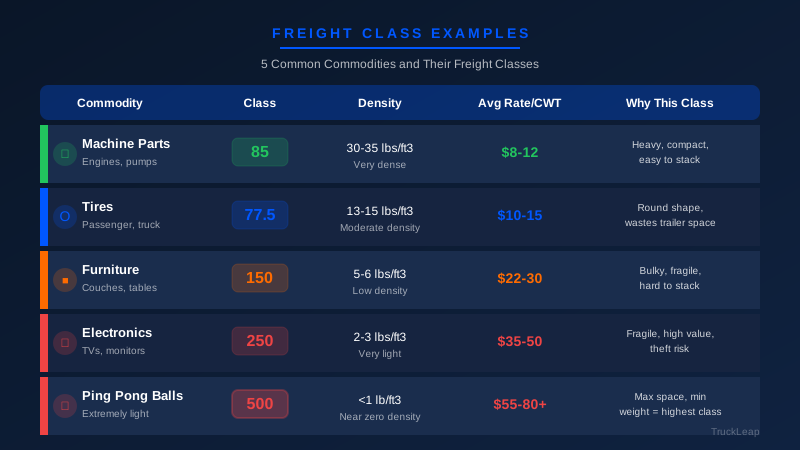
Quick Reference: Common Commodity Classes
| Commodity | Typical Class |
|---|---|
| Steel, iron, bricks | 50–55 |
| Automotive parts | 65–85 |
| Electronics | 85–100 |
| Furniture | 125–200 |
| Clothing, soft goods | 150–175 |
| Mattresses | 250 |
| Empty boxes, styrofoam | 300–500 |
Data sources: NMFTA (National Motor Freight Traffic Association), carrier tariff publications.