Dispatch Service Built for Owner-Operators
If you're spending 3 hours a day on load boards and still leaving money on the table, that's a dispatch problem. We find the freight, make the broker calls, and handle the paperwork - so your job is driving, not chasing loads.
The Owner-Operator Advantage
What Actually Changes When You Stop Self-Dispatching
Dispatching your own truck is a second job. Most solo operators spend 2–4 hours a day on it and still miss better loads because they weren't watching the board at the right moment. Here's what's different when we take it over.
2–4 Hours a Day Back in Your Pocket
That's the average time owner-operators spend on DAT and broker calls. We work the boards every day - you use that time to drive, rest, or run your business.
Brokers Treat Us Differently Than They Treat You
A solo carrier calling about one load gets a different conversation than a dispatcher calling on behalf of 40 carriers. We work 200+ brokers daily. Some of them owe us a favor. That's how you get $2.55/mile when the board shows $2.20.
Rate Cons, BOLs, and Check Calls - Handled
We deal with the paperwork on every load. You confirm the load, we handle broker communication, rate confirmation, and check calls. Your job doesn't include broker management.
Honest About When It's Not Worth It
Dispatch costs 6%. If you're already running premium freight at strong rates and your lanes are dialed in, the math is tighter. We'll tell you that upfront rather than oversell what we do.
The Numbers
What the Math Looks Like
18–25%
Typical Rate Improvement
Above what self-dispatched operators get on comparable lanes - not guaranteed, but common
2–4 hrs
Hours Saved Per Day
Time you stop spending on load boards and broker calls
6%
Flat Dispatch Fee
Paid after broker pays you - never upfront
48 hrs
Onboarding Time
From application to first active load search
Our Pricing
Simple, Transparent Pricing
One number. No monthly minimums. No contracts. You pay after the broker pays you - not before.
Standard Tier
6%
of gross load revenue
- ✓For 1–3 trucks with 6+ months authority
- ✓Invoiced after broker pays you
- ✓No upfront fees, no contracts
- ✓Cancel anytime
The Honest Version
Owner-Operator Dispatch: When It Makes Sense and When It Doesn't
Running one truck means every bad decision hits you directly. A week of below-market loads, three days of deadhead you didn't plan for, or 15 hours of broker calls that landed you two loads you could have gotten in two calls - that's money out of your pocket. ATBS data shows professionally dispatched owner-operators earn $18,000–$28,000 more per year than self-dispatched operators on comparable equipment. That gap comes from rate negotiation, market timing, and broker relationships - not magic.
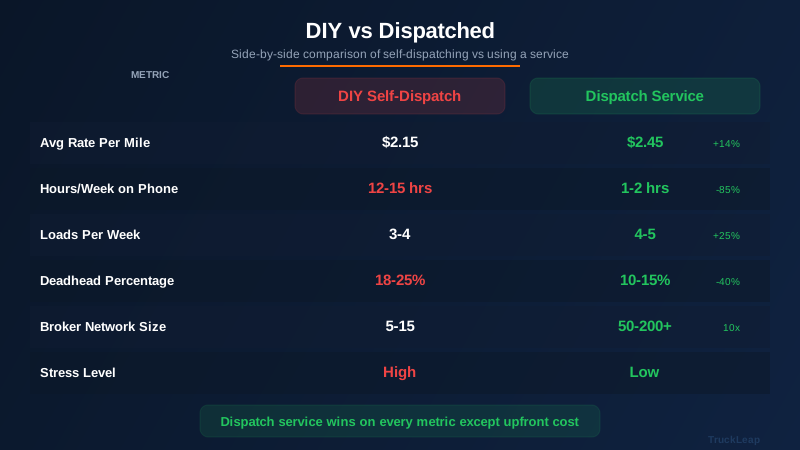
Here's the honest version of when dispatch is worth it: you're spending 2–4 hours a day working the load boards, you don't have deep broker relationships yet, and your rate per mile is probably $0.15–$0.30 below what an experienced dispatcher would get you on the same lanes. The 6% fee covers itself when that rate gap is real. If you already have strong broker relationships, know your lanes cold, and can work the board efficiently - dispatch might not move the needle enough to justify the cut.
New authoritieshave a separate issue: brokers won't call back. Carrier monitoring services like Carrier411 and RMIS flag new MC numbers, insurance takes 3–7 days to propagate, and many brokers auto-reject carriers under 60–90 days old. We have relationships with brokers who specifically work with new authorities and know the propagation timeline - so we can get new operators loaded when the phone calls aren't getting returned.
- 6% flat fee, invoiced after the broker pays you - no upfront costs
- Load search, rate negotiation, rate con, and broker communication on every load
- We track market rates daily - you never haul below what the lane is actually paying
- New authority access: broker relationships that accept carriers under 6 months old
- Lane strategy and rate floor guidance - not just load-finding, but freight business advice
Deep Dive
Is Dispatch Worth It? The Real Math
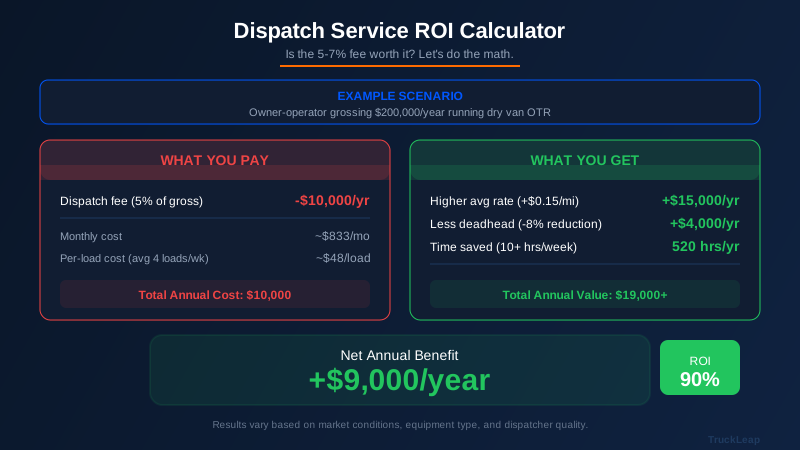
The objection sounds reasonable: "Why would I pay someone 6% of every load I run? I can find my own loads." It's a completely understandable reaction. But when you account for the rate difference between self-dispatched and professionally dispatched carriers, plus the real cost of time you spend doing your own dispatching, the numbers tell a very different story.
The Rate Math
A good dispatcher isn't just saving you time. They're getting you materially better rates - because they negotiate full-time, have existing broker relationships, and know exactly what a lane is paying right now. The typical rate differential is 15–25% over self-dispatched carriers on comparable lanes.
Scenario: 10,000 miles per month
Self-dispatching
- Rate: $2.10/mile (loaded)
- Loaded miles: 8,000 (~80% loaded)
- Gross monthly revenue: $16,800
Dispatch (15% rate improvement, 6% fee)
- Rate: $2.415/mile
- Gross before fee: $19,320
- Dispatch fee (6%): −$1,159
- Net monthly revenue: $18,161
Difference: $1,361 more per month - and that's the conservative version. Use the more typical 20% improvement and the gap widens to $2,150/month.
The Time Math (The Part People Miss)
The piece most owner-operators never properly account for: the cost of the time you spend dispatching yourself.
| Activity | Time Per Day |
|---|---|
| Searching load boards | 45–60 min |
| Calling brokers and negotiating | 45–90 min |
| Reviewing rate confirmations | 15–20 min |
| Route & deadhead planning | 15–30 min |
| Check calls during haul | 20–30 min |
| Total per day | 2.5–4 hours |
On a 22-driving-day month, that's 55–88 hours per month. At a conservative $35/hour opportunity value, that's $2,625/month in time cost alone.
The Full Picture
| Factor | Monthly Value |
|---|---|
| Rate improvement (20% better rates, 6% fee) | +$2,150 |
| Time recovered (75 hours × $35/hr opportunity cost) | +$2,625 |
| Total monthly benefit of dispatch | +$4,775 |
Even cutting time value in half and using only a 15% rate improvement, you're still looking at $2,700+ per month in combined benefit.
Common Objections, Honestly Addressed
"I don't want to share my revenue."
You share revenue with your fuel card company, your ELD provider, your insurance carrier, and your truck payment lender. You do that because those services enable your operation. Dispatch is no different - except a good dispatcher adds more value than almost any other service you pay for. You're not sharing revenue. You're investing 6% to earn back 20%.
"I can find my own loads just as well."
Maybe. But can you find them as fast, negotiate them as high, and do it all without stopping your truck? The 15–20% gap isn't theoretical - it's what the data shows across thousands of loads.
"Dispatch services only care about their commission."
A legitimate dispatch service only earns when you earn. Their income goes up when your rates go up, so their incentive is perfectly aligned with yours. They want to get you the highest rate possible on every load.
"What if they can't find me enough loads?"
Before signing on, ask: what equipment types do you specialize in? what's your average rate per mile in my primary lanes? do you have a minimum load guarantee, or is this purely performance-based? can I talk to current carrier clients?
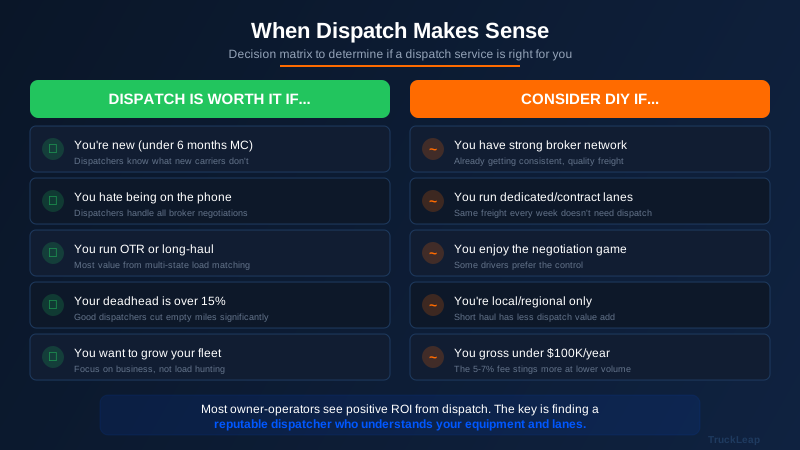
When Self-Dispatching Actually Makes Sense
To be fair: there are situations where self-dispatching is the right call.
- Deep direct shipper relationships - if you've spent years building relationships with 3–4 shippers who call you directly and pay at or above market, dispatch may add less incremental value.
- You genuinely enjoy the business side - some operators love the negotiation and strategy of finding freight.
- Very specialized niche - permit loads, military freight, ultra-high-value cargo where relationships are so specific a general dispatcher can't help much.
For most owner-operators, none of these apply. Most are self-dispatching because they haven't done the math, not because they've concluded it's the better path.
Owner-Operator Questions
Frequently Asked Questions
Explore More
Related Dispatch Services
Dry Van Dispatch
Consistent 53' loads at $2.30+/mile
Learn more →Flatbed Dispatch
Steel, lumber, permits at $2.65+/mile
Learn more →Reefer Dispatch
Temperature-controlled at $2.75+/mile
Learn more →Hotshot Dispatch
Gooseneck & expedited at $2.10+/mile
Learn more →New MC?New Authority
First loads within 48 hrs
Learn more →Small Fleets
2–20 trucks at 5% fee
Learn more →Real Owner-Operators
Solo Truckers Who Stopped Chasing Loads
Veterans, flatbed solos, and growing operators - here's what shifted after they handed off broker calls.
“I've been driving for 12 years and I've worked with plenty of 'dispatchers' who just want their 5%. This company is different. They actually know my lanes and respect my home-time requirements. They don't force-dispatch me on a load that ruins my week.”
Linda K.
Scranton, PA
Solo · 12 years driving“I run flatbeds and usually hate dealing with dispatch services. This group is different. They understand the equipment requirements and don't send me to shippers that are going to waste my time. Efficient and honest.”
Brian H.
Columbus, OH
Solo · flatbed“I've got two dry vans. During the slow season last month, they were the reason I didn't park the trucks. They managed to find backhauls that kept me out of the deadhead trap. Consistent, professional, and they don't hide the numbers.”
Robert M.
Denver, CO
Small fleet · 2 dry vansStop Spending Your Day on the Phone With Brokers
Apply takes 5 minutes. We'll review your equipment, lanes, and current rates - and tell you honestly whether the numbers make sense before you commit to anything.
Apply Now - Free Setup