Can't Find Loads for Your Truck? Here's What's Going On.
You're not sitting because freight dried up. You're sitting because the freight that's moving isn't getting posted where you're looking. There's a difference - and it's fixable.
The Real Reasons
Why Owner-Operators Can't Find Freight
Blaming the market is easy. But most of the time, the real problem is positioning, timing, or relationships - all of which you can actually do something about.
You're Only Seeing Public Freight
30-40% of brokered loads never hit a public board. Brokers with a reliable carrier on the phone don't bother posting. If you only search boards, you only see what's left over.
You're Too Far From a Freight Hub
Being 50 miles outside of Chicago, Dallas, Atlanta, LA, or Memphis cuts your available load volume by more than half. Run the repositioning math before you sit another day.
No Broker Relationships
A broker who's moved 20 loads with you and never had a problem will call you before they post. A broker who's never heard your name will post first and wait. Relationships aren't optional - they're how the market actually works.
You're Searching at the Wrong Times
5-7 AM is when brokers post next-day loads. 2-4 PM is when same-day loads are getting desperate and rates tick up. Midday searching mostly turns up stale freight nobody else wanted.
Your Equipment Has a Slow Season
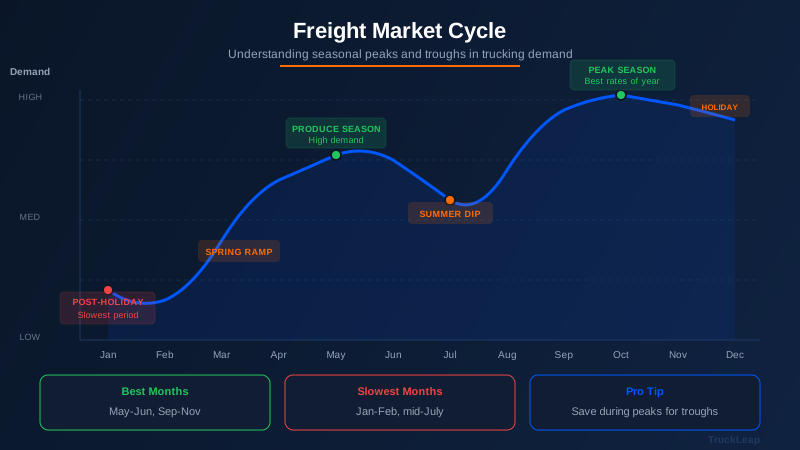
Dry van slows hard in January. Flatbed picks up in spring. Reefer peaks summer and fall. If you don't know your equipment's cycle, slow periods will blindside you every year.
The Market Actually Is Slow
Sometimes it's real. When spot market freight dries up, the carriers still moving have contract freight and broker relationships that don't live or die by the public board.
Root Cause Analysis
Why Carriers Can't Find Loads (And How to Fix It)
DAT has over 400,000 registered carriers. You're not competing with 400,000 truckers - you're competing with 400,000 versions of yourself, all looking at the same loads. The ones who are rolling aren't better at searching. They're not on a different load board - they've moved past public boards entirely. They have broker relationships that produce freight before it ever gets posted. The public board is what brokers fall back on when they couldn't book it any other way.
Tuesday and Wednesday loads book 18–22% faster and at higher rates than Monday or Friday freight. Monday boards are glutted with weekend overflow that didn't move. Friday loads are pressure freight - shippers who couldn't book all week, brokers trying to close out. If you're spending your best calling hours on Monday morning or Friday afternoon, you're fishing in the wrong tides. The cleanest loads, with the most room to negotiate, come mid-week.
Geography matters more than most operators admit. Sitting 80 miles from the nearest freight hub isn't the same as sitting in Memphis or Atlanta. Major hubs generate 3–4x more available loads within pickup range. That doesn't mean you need to live there - it means before you sit another day wondering why nothing is posting near you, run the repositioning math to cut your empty miles. A hundred miles of deadhead at $0.65/mile costs you $65. If moving puts you in range of three times the freight, it usually pays. Use our Deadhead Calculator to find out before you burn the fuel.
The 30–40% number is real. That's the share of brokered freight that gets booked before any public posting ever happens. A broker who has a carrier they trust will pick up the phone first - it's faster, easier, and less work than posting, fielding calls, and vetting carriers they've never worked with. A dispatcher managing loads for 20+ carriers builds that trust by doing hundreds of loads a year with the same brokers and consistently negotiating better rates across them. An owner-operator who calls a broker twice a month is always a stranger.
- Search Tuesday–Thursday mornings - better loads, more broker flexibility, less competition
- Get within 50 miles of Chicago, Dallas, Atlanta, LA, or Memphis before you start looking
- Call 10+ brokers per load - the first three calls are the tip of the iceberg
- Run the deadhead math before repositioning - 100 miles costs $65+ in fuel alone
- Build broker relationships - that's the only path to the 30–40% of freight that never gets posted
Deep Dive
Sitting With No Loads Right Now? Here's the Action Plan
You've been staring at the load board for two hours. The same few loads keep cycling through. Your truck is sitting. Your phone isn't ringing. This is one of the most stressful experiences in trucking, and it happens to every owner-operator at some point. But sitting and waiting is the one thing you should not do.
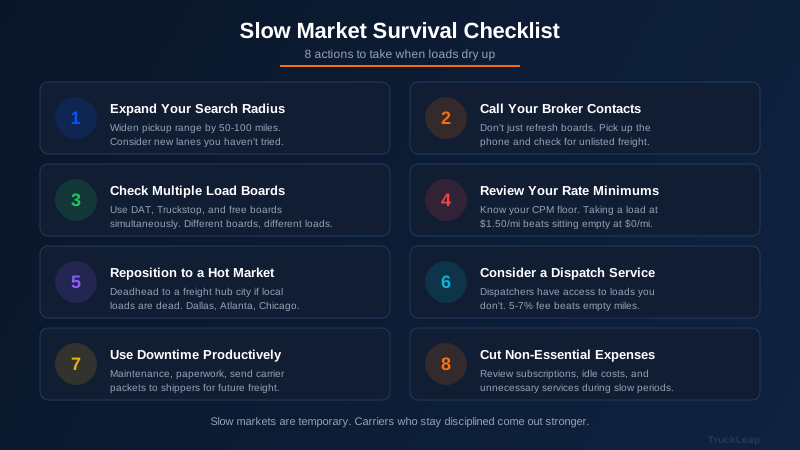
First: Why Is This Happening?
Seasonal cycles:Freight demand is deeply seasonal. January is the post-holiday hangover. February is traditionally the slowest freight month. Late summer (August) sees a pre-harvest lull. If it's a historically slow time of year, you're not doing anything wrong - you're experiencing normal market cycles.
Bad lane positioning: The most fixable cause. If you ran a load to a low-volume market and now you're sitting in a city with minimal outbound freight, that's a positioning problem. Every pickup decision is also a positioning decision for your next load.
Searching too narrow: Are you only looking at loads that meet your ideal rate, exact equipment type, and preferred delivery window in a 50-mile radius? That's not a load search, it's a wish list. When freight is tight, expand your parameters.
What to Do Right Now (Step-by-Step)
- 1Expand your search radius. If you're searching within 50 miles, go to 100. If you're at 100, go to 200. Use the Deadhead Calculator to quantify exactly how much deadhead you can absorb before a load stops making sense.
- 2Drop your rate floor (but know your minimum). There is a rate below which it doesn't make financial sense to move. Use the Cost Per Mile Calculator to establish your break-even, then decide how far below your ideal rate you're willing to go.
- 3Call brokers directly - don't just refresh. The load board shows what brokers couldn't fill through existing carrier relationships. The best loads often never hit the board. Call brokers active in your area. Brokers hold loads back all the time.
- 4Check adjacent equipment types. If dry van is dead in your area, look at what else is available. Are there partial loads or LTL consolidation opportunities? Sometimes a load in a slightly different category is sitting right there.
- 5Try a load board you're not using. If you're a DAT user, check Truckstop. Different brokers use different boards. A load that isn't on DAT might be sitting on Truckstop and vice versa.
- 6Check spot market platforms. Amazon Relay, Convoy, and Uber Freight sometimes have loads available that aren't being filled, especially in secondary markets or at off-peak times.
- 7Call your existing broker contacts. If you've hauled for specific brokers before and delivered well, call the rep you've worked with. Existing relationships move faster than cold calls.
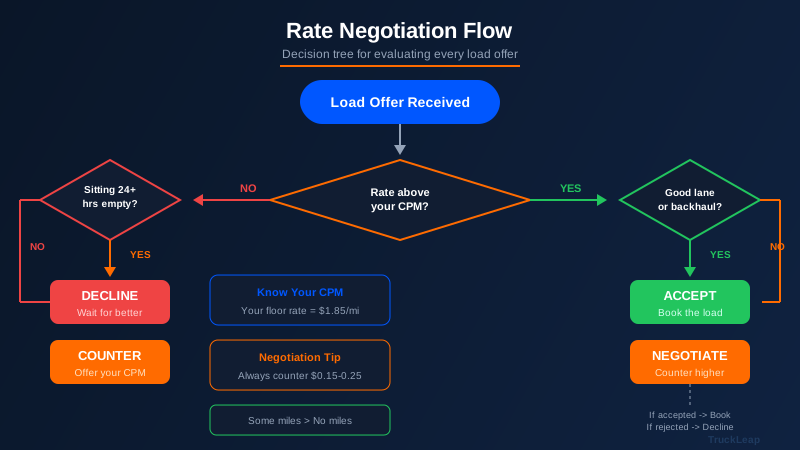
Evaluate Any Load Before You Take It
When things are slow, there's a strong psychological pull to take any load just to get moving. Resist accepting blindly. A load that delivers you deeper into a dead market, or that nets you below your break-even rate after deadhead, can make your situation worse. Use the Load Profitability Calculator before accepting any load. It accounts for your deadhead miles, fuel costs, your fixed costs per day, and the load's gross rate, giving you a true net per mile so you can make an informed decision rather than an emotional one.
Structural Changes That Prevent Future Dry Spells
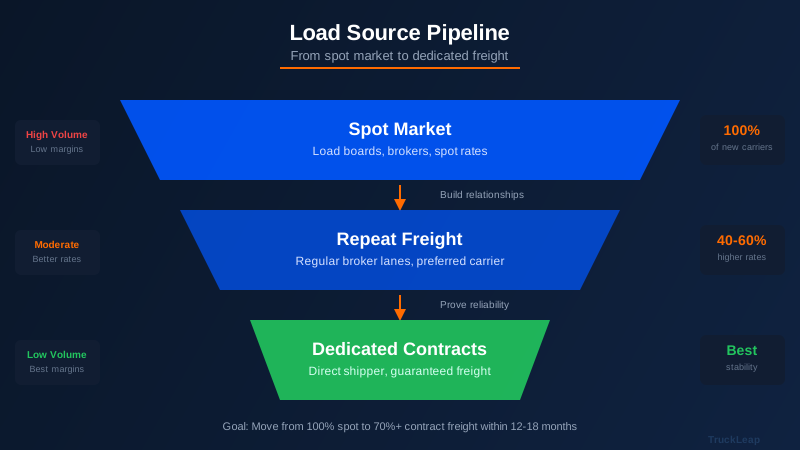
Diversify your freight sources. The carriers most vulnerable to slow markets rely entirely on spot market load boards. The ones who weather slow periods best have at least one direct shipper relationship, 2–3 broker relationships where they get called before loads hit the board, and load boards as a backup, not their primary source.
Manage lane positioning aggressively. Every load is a bet on where the freight will be next. Before accepting a load that delivers you to a secondary market, check the outbound freight situation there. DAT and Truckstop both show load-to-truck ratios by market.
Build a 60-day operating reserve. Slow weeks are much less stressful when you have 60 days of fixed costs in a savings account. Even $5,000 in a separate account changes the psychology of slow markets - you can afford to wait for a good load instead of accepting the first bad one.
Deep Dive
The Complete 2026 Playbook for Finding Loads
Finding consistent, profitable freight is the single most important skill an owner-operator can develop. The carriers doing well right now are the ones who layer multiple freight sources: a base of direct shipper relationships, supplemented by broker lanes they run consistently, with load boards as a backstop.
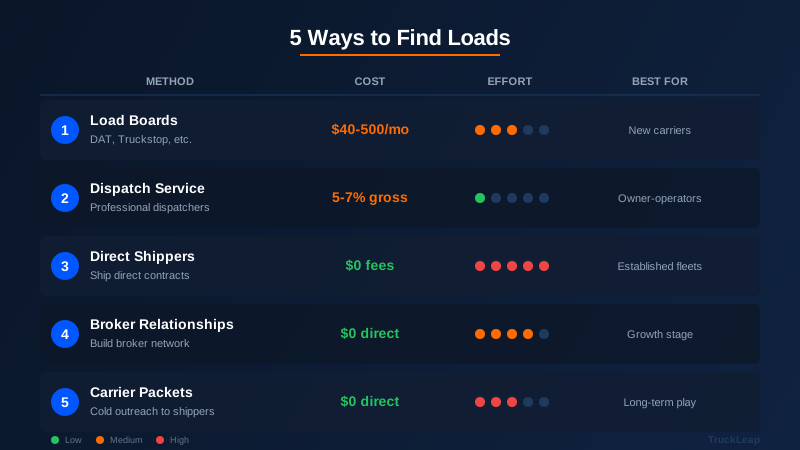
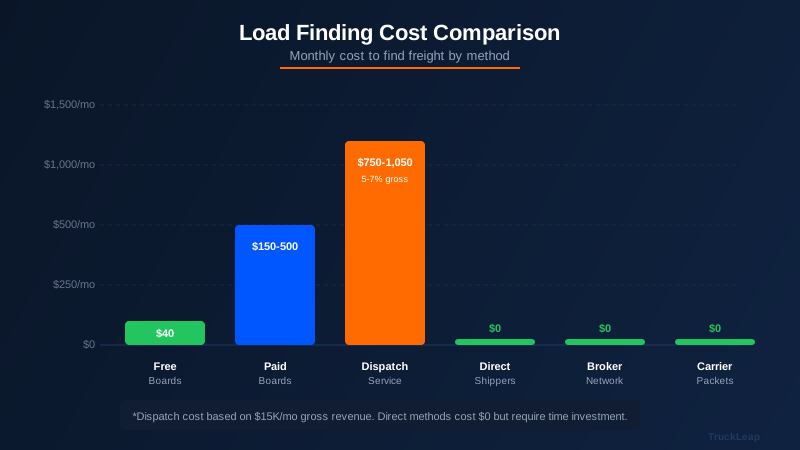
Load Boards Compared (2026)
| Load Board | Monthly Cost | Loads/Day | Best For |
|---|---|---|---|
| DAT One | $45–$150/mo | 1.4M+ | Dry van, reefer, flatbed - all equipment |
| Truckstop | $40–$169/mo | 500K+ | Dry van, flatbed; strong broker relationships |
| 123Loadboard | Free–$35/mo | 250K+ | Budget-conscious new carriers |
| Convoy | Free (per-load) | Variable | Algorithmic matching; no calls |
| Uber Freight | Free (per-load) | Variable | Instant book; no negotiation |
| Amazon Relay | Free (per-load) | Variable | Amazon network; consistent volume |
Best strategy on DAT: Use saved-search alerts to get notified the moment a matching load posts. The carriers refreshing manually are always behind those with alerts set up.
Building Real Broker Relationships
The mistake most carriers make is treating brokers transactionally: accept the load, deliver it, move on. Brokers remember carriers who are easy to work with.
- 1Identify brokers active in your lanes - search DAT/Truckstop for loads in your regular lanes; note who posts consistently.
- 2Deliver flawlessly. The first load is your audition.
- 3Call after delivery. Thank them. Ask what lanes they're consistently shipping.
- 4Stay on their radar - a quick text or email every week or two costs you nothing.
- 5Get preferential loads - brokers who trust you call first with their best loads before posting them publicly.
Equipment-Specific Strategies
Dry Van
Most competitive equipment type because of the sheer volume of carriers. Load boards: DAT, Truckstop, Convoy, Uber Freight, Amazon Relay. Direct shipper targets: retail distribution centers, food manufacturers, consumer goods. Best lanes: major freight corridors (I-80, I-10, I-95).
Flatbed
Requires more skill and commands better rates, but the load board pool is smaller and seasonality matters more. Direct shipper targets: steel mills, lumber yards, construction suppliers. Construction season (spring through fall) drives flatbed demand.
Refrigerated (Reefer)
Pays a premium for the additional equipment cost and temperature responsibility. Broker relationship is critical because shippers are more selective. Direct shipper targets: grocery distribution centers, produce shippers, pharmaceutical companies. Document temperature requirements - chargebacks for excursions can wipe out a load's profit.
Hotshot, Power Only, Box Truck, Step Deck, Sprinter Van
Each has its own ecosystem. Hotshot uses Central Dispatch and uShip for smaller loads. Power-only carriers run trailer pools with major retailers. Box truck has growing e-commerce volume. Step deck and specialized commands the highest rates but requires permit knowledge. Sprinter van is the fastest-growing segment for time-critical and medical freight.
Building a Sustainable Freight Strategy
The carriers who thrive long-term don't rely on any single method. The framework:
- Tier 1 - Base freight (60–70% of volume): Direct shipper relationships or a reliable dispatch service. Consistent rates, planned lanes, predictable income.
- Tier 2 - Broker relationships (20–30%): 3–5 brokers who know you, trust you, and call you first. Good rates, reliable payment, some lane flexibility.
- Tier 3 - Load boards (10–20%): Spot market loads to fill gaps, reposition, or chase premium freight.
If you're currently spending most of your time on Tier 3, you're working harder than you need to for less money than you deserve.
Common Questions
Frequently Asked Questions
Real Carrier Stories
Carriers Who Stopped Sitting Empty
What changed when they handed off the load search.
“I've got two dry vans. During the slow season last month, they were the reason I didn't park the trucks. They managed to find backhauls that kept me out of the deadhead trap. Consistent, professional, and they don't hide the numbers.”
Robert M.
Denver, CO
Small fleet · 2 dry vans“I was tired of getting lowballed by brokers who knew I was empty in a dead zone. TruckLeap got me a backhaul out of Laredo that actually covered my fuel and then some. They don't just find loads; they strategize my whole week so I'm not sitting on my hands.”
Pavel G.
Philadelphia, PA
Solo · 2022 Kenworth dry van“I run the NW-SW lanes. TruckLeap knows the produce seasons perfectly. They had me positioned in Yakima right when the cherries started moving. They play the market like a chess game.”
Travis J.
Portland, OR
Reefer · independentStop Refreshing Load Boards. Let Us Find Your Freight.
Apply in 5 minutes. We'll start working broker relationships on your behalf within 48 hours.
Apply Now - Free Setup