
IFTA (the International Fuel Tax Agreement) is one of the most misunderstood compliance requirements for owner-operators. Miss a filing, calculate it wrong, or fail an audit, and you're looking at penalties, interest, and headaches.
This guide covers everything you need to know to file IFTA correctly and on time.
What Is IFTA?
IFTA (International Fuel Tax Agreement) is a tax collection agreement between the 48 contiguous U.S. states and 10 Canadian provinces. It simplifies fuel tax reporting for commercial motor vehicles that travel across multiple jurisdictions.
Instead of paying fuel tax in every state you drive through, you file a single quarterly report with your base jurisdiction (the state where your truck is registered). They distribute the tax owed to each state based on your mileage.
Why it matters: Without IFTA, you'd need separate fuel tax permits and reports for every state you operate in. IFTA consolidates this into one quarterly filing.
Who Must File IFTA?
You must have an IFTA license if your commercial motor vehicle:
- Has two axles AND a GVW or registered GVW exceeding 26,000 lbs, OR
- Has three or more axles regardless of weight, OR
- Is used in combination with a gross combination weight exceeding 26,000 lbs
If you drive a standard 18-wheeler or Class 8 truck interstate, you need IFTA.
Exemptions: Vehicles operating only within one state do not need IFTA (they use a state intrastate permit). Recreational vehicles are also exempt.
IFTA Filing Deadlines
IFTA is filed quarterly:
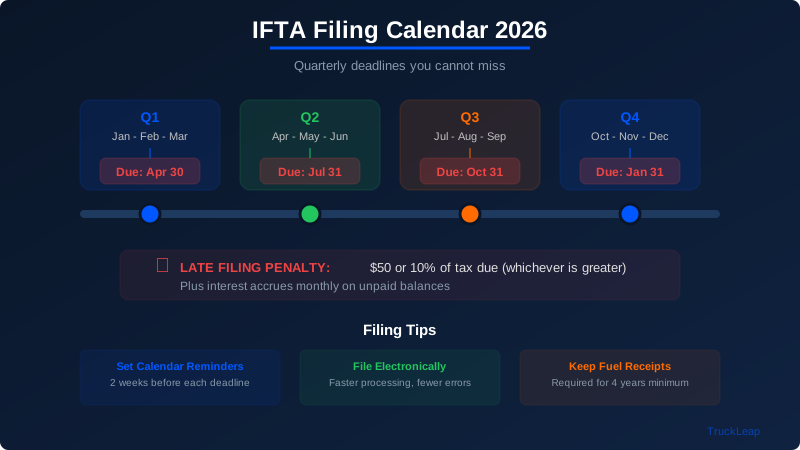
| Quarter | Period | Due Date |
|---|---|---|
| Q1 | January – March | April 30 |
| Q2 | April – June | July 31 |
| Q3 | July – September | October 31 |
| Q4 | October – December | January 31 |
Late filing penalty: Typically $50 or 10% of the tax due, whichever is greater, depending on your state.
How IFTA Works: The Core Concept
IFTA is based on a simple principle: you pay fuel tax based on where you drive, not where you buy fuel.
The calculation:
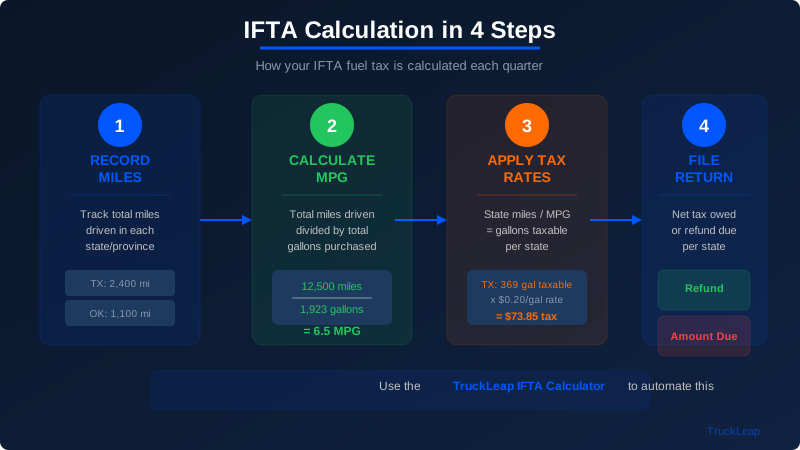
- Calculate your taxable gallons in each state: Miles driven ÷ Fleet MPG
- Subtract gallons purchased in that state
- Multiply the difference by that state's tax rate
- If positive, you owe that state. If negative, you get a credit.
Net amounts across all states are combined, and you either owe or receive a refund.
Use our free IFTA Calculator to run these numbers instantly.
Step-by-Step: How to File IFTA
Step 1: Get Your IFTA License
Apply through your base state's motor carrier authority. You'll receive IFTA decals (two per truck, displayed on each side of the cab) and a license to carry in the cab.
Cost: Typically $10–$25/year for decals, varies by state.
Step 2: Track Miles Per State
This is the most important step. You must track miles driven in each IFTA jurisdiction. Your ELD (Electronic Logging Device) does this automatically, so make sure you're extracting IFTA mileage reports from it each quarter.
If you don't have an ELD (exempt drivers), use a paper mileage log noting the odometer reading and state every time you cross a border.
Step 3: Track Fuel Purchases Per State
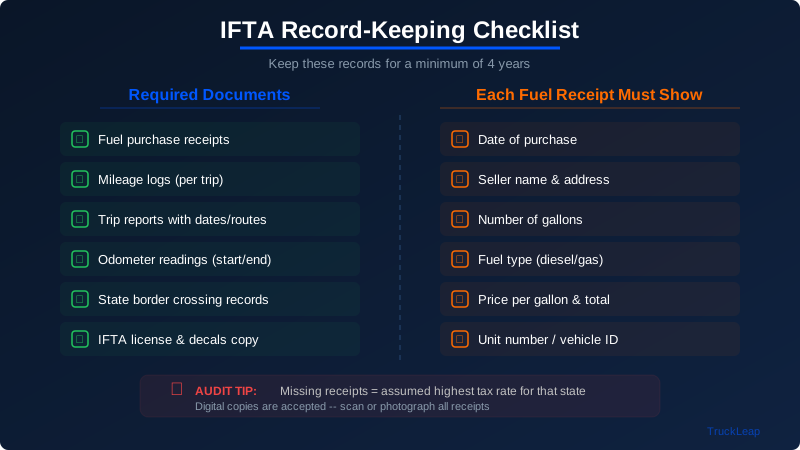
Keep every fuel receipt showing:
- Date
- Location (city, state)
- Gallons purchased
- Price per gallon
- Vehicle identification
Most ELDs and fuel cards (e.g., EFS, Comdata, TCS) generate IFTA-ready fuel reports automatically.
Step 4: Calculate Fuel Tax Owed
For each state:
Taxable Gallons = Miles Driven in State ÷ Fleet MPG
Net Taxable = Taxable Gallons − Gallons Purchased in State
Tax Due/Credit = Net Taxable × State Tax Rate
States where you bought more fuel than you used (common in low-tax states) = credit. States where you used more fuel than you bought (common in high-tax states) = owe.
Use our IFTA Calculator to do this math automatically for all jurisdictions.
Step 5: File and Pay
Log in to your base state's IFTA filing portal and submit your quarterly report. Most states accept online filing. Payment is due by the deadline.
If you're owed a net refund, your base state will process it (processing times vary by state).
IFTA Tax Rates by State
Tax rates vary by state and change periodically. Some states have surcharges on top of the base rate. Always use current rates. See our IFTA Calculator by State for current rates.
High tax states (>$0.40/gallon): Pennsylvania, Connecticut, New Jersey, California Low tax states (under $0.20/gallon): New Mexico, Arizona, Mississippi, Wyoming
Common IFTA Mistakes (and How to Avoid Them)
1. Missing miles from non-ELD vehicles or ELD data gaps If your ELD goes offline, you must manually log miles. Gaps in mileage records are the #1 audit trigger.
2. Not keeping fuel receipts for 4 years IFTA audits can go back 4 years. Keep all fuel receipts and mileage records.
3. Using the wrong MPG Your MPG should be your actual fleet average, not the manufacturer's spec. Calculate it from your actual fuel consumption over the quarter.
4. Forgetting Canadian provinces If you drive into Canada, the 10 IFTA provinces (all except Northwest Territories, Nunavut, and Yukon) are included in IFTA. Track Canadian miles and fuel separately.
5. Filing late Even if you drove zero miles in a quarter, you must file a zero return. Late zero returns still get penalized.
IFTA Audit: What Triggers It?
Common audit triggers:
- MPG significantly below or above industry average (under 4 or over 10)
- Large discrepancy between miles reported and ELD records
- Fuel purchases in states with no miles, or miles with no fuel
- Inconsistent quarterly MPG (varies wildly quarter to quarter)
- Prior late filings or penalties
Calculate Your IFTA Now
Use our free IFTA Calculator to estimate your quarterly fuel tax. Enter miles and gallons per state and see exactly what you owe or what refund to expect.
Data sources: IFTA Inc. (ifta.org), FMCSA compliance resources, state motor carrier authority guidelines.