Produce Season Dispatch - Cash In on Premium Seasonal Freight
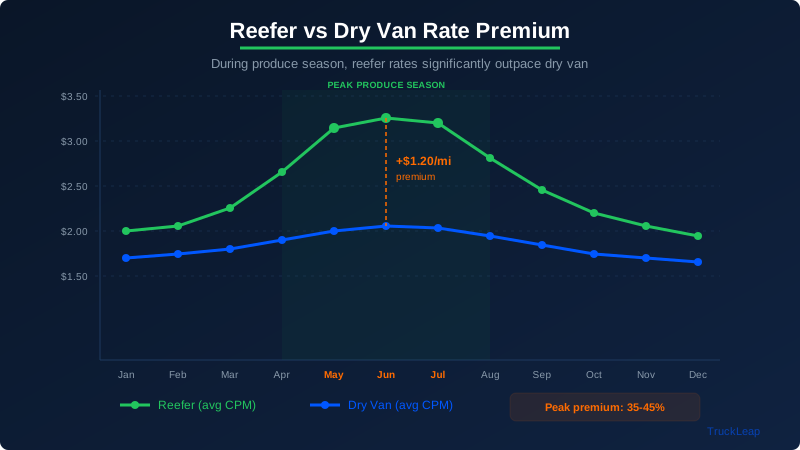
Produce season rates run 20-40% above standard reefer. We position your truck in the right market at the right time of year.
Why Produce Freight
How We Position You for Peak Season Rates
Produce freight rewards carriers who know the seasons, the regions, and the compliance requirements. We handle all three - so you capture the premium.
Seasonal Rate Premiums
Produce loads pay 20-40% above standard reefer during harvest peaks. We track seasonal patterns by region and commodity to maximize your earnings window.
California Central Valley
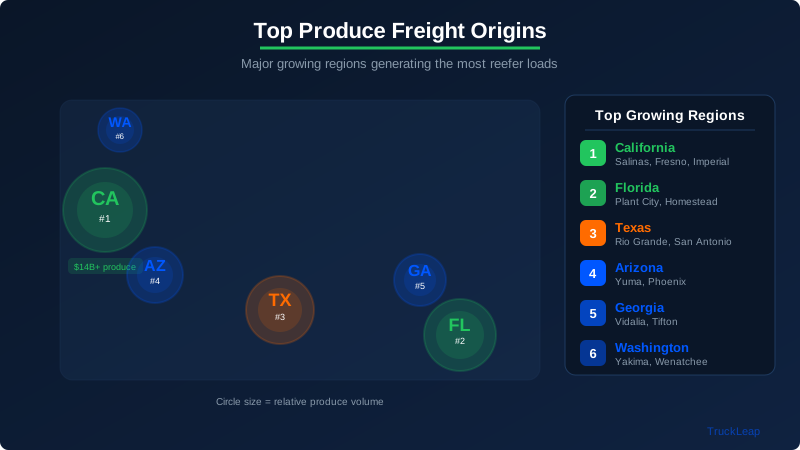
The #1 produce shipping region in the US. We have shipper contacts in Salinas, Fresno, and Bakersfield for berries, lettuce, stone fruit, and grapes.
Florida & Georgia Coverage
Tomatoes, strawberries, blueberries, and citrus peak in winter/spring. We position reefer drivers for the Southeast harvest before rates spike.
FSMA Compliance Guidance
We ensure your carrier packet and load documentation meets Food Safety Modernization Act requirements so you can haul the highest-paying food-grade loads.
Temperature Monitoring Support
Produce loads require continuous temperature logs. We document temp requirements at booking and ensure you have the right reefer settings before pickup.
Year-Round California Pipeline
California's Central Valley ships 52 weeks a year. Even outside peak produce season, we source consistent refrigerated loads from the state's agricultural regions.
Deep Dive
Produce Season Corridor-by-Corridor Strategy
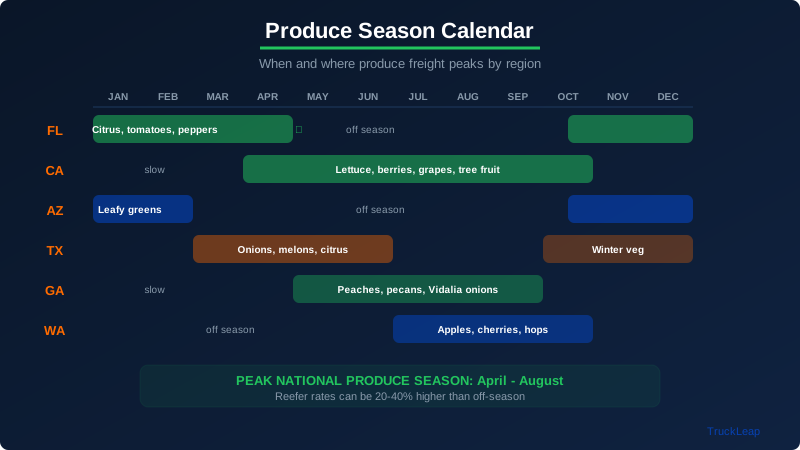
Reefer carriers experience two realities in a single calendar year. From November through March, refrigerated freight rates hover near dry van equivalents. Then April arrives, California strawberries start moving, Florida citrus wraps up and melons kick in, and suddenly there aren't enough reefer trucks to cover the freight. Produce season is the most reliable rate spike in trucking.
Why Rates Spike in Produce Season
- Sudden volume surge: produce volume can increase 60–80% week-over-week as a crop hits peak harvest.
- Specialized equipment required: only reefer units with functioning refrigeration can haul fresh produce.
- Short transit windows: perishable freight moves on tight delivery windows, limiting carrier availability.
- Geographic concentration: much of U.S. produce comes from California's Central Valley, Yuma, and Florida.
The result: rates on key produce corridors regularly hit $3.00–$4.50/mile during peak season, compared to $2.00–$2.50/mile in winter months for the same lanes.
California Central Valley → East Coast
The flagship produce corridor and highest-volume reefer lane in the country during summer months.
- What moves: grapes, peaches, plums, tomatoes, almonds, pistachios, lettuce, strawberries
- Peak timing: June–September
- Origin cities: Fresno, Bakersfield, Salinas, Stockton, Modesto
- Rate range during peak: $3.50–$4.50/mile to Northeast destinations
- Transit time: 3–5 days depending on destination
The challenge with this corridor is the backhaul. Very little freight pays well going back into California. Plan your routing out of California carefully before committing to this lane.
Florida → Midwest
Florida's produce season runs differently than California's. It peaks in winter and spring (December–April).
- What moves: tomatoes, bell peppers, strawberries, cucumbers, squash, citrus
- Peak timing: January–April
- Origin cities: Homestead, Immokalee, Plant City, Belle Glade
- Rate range during peak: $2.80–$3.60/mile to Midwest destinations
- Transit time: 1–2 days to most Midwest markets
Florida produce season overlaps partially with winter slow season for other freight, making it a useful rate stabilizer for reefer carriers who want to avoid the typical winter slowdown.
Nogales (AZ) → Nationwide
Nogales is the primary point of entry for Mexican produce and generates enormous reefer volume from approximately November through May.
- What moves: tomatoes, cucumbers, peppers, squash, mangos, avocados
- Peak timing: November–May
- Rate range during peak: $2.70–$3.40/mile to East Coast, $2.40–$2.90/mile to Midwest
- Special requirement: most Nogales produce requires a valid Customs bond for cross-border capability
Getting Into Produce Freight for the First Time
Produce brokers and shippers are more selective about carriers than general freight operations. Perishable loads have real financial consequences if mishandled - a rejected load of strawberries can cost $15,000–$40,000.
What they look for:
- 1Clean safety record - no recent preventable accidents, satisfactory FMCSA rating
- 2Functioning refrigeration unit with recent service record - documentation of last PM service
- 3Pre-cooled trailer - most produce loads require pre-cooling to 34–38°F before loading
- 4Temperature logging capability - continuous temperature monitoring on every load
- 5Experience with temperature-sensitive freight - work through a broker who can vouch for you on your first loads
Protecting Yourself From Claims and Rejections
Document at pickup:Take dated photos of product temperature, condition, and pallet integrity before you close the trailer doors. Get a clean Bill of Lading - don't accept a BOL that notes product damage at pickup without noting those exceptions yourself.
Temperature claims are the most common cause of cargo claims in reefer trucking. Set the reefer at the temperature specified on the load confirmation - exactly, not approximately. Never adjust the temperature setting mid-trip without written authorization.
Produce liability coverage: Standard cargo insurance may not fully cover perishable cargo claims. Confirm with your insurance carrier that your policy covers produce freight and at what limit. Some produce loads require $250,000+ in cargo coverage - verify before accepting.
Planning Your Produce Season
3–4 months before
Service your reefer unit (refrigeration coils, condenser, thermometer calibration). Complete carrier packets with produce brokers. Identify your target corridor and position your truck.
6 weeks before peak
Start taking some produce loads to establish track record with brokers. Get familiar with produce-specific BOL requirements. Connect with a produce-experienced dispatcher if you're new to this freight.
During peak
Track your revenue per mile daily - use the load profitability calculator to compare produce loads against general freight alternatives. Don't chase every high-rate load without considering the backhaul.
After peak
Review temperature logs and claim history. Use produce season revenue to build cash reserves for the winter slow period.
Produce Freight Questions
Frequently Asked Questions
Produce & Reefer
Reefer Carriers Who Time the Market
Cherries, pharma, and high-value freight — when timing wins the rate.
“I run the NW-SW lanes. TruckLeap knows the produce seasons perfectly. They had me positioned in Yakima right when the cherries started moving. They play the market like a chess game.”
Travis J.
Portland, OR
Reefer · independent“I run three reefers and margins have been razor-thin this quarter. My dispatcher isn't just looking for any load; they're hunting for high-value pharma or food grade that keeps my 2023 Volvos profitable. They don't just take the first rate-con; they negotiate for me. A breath of fresh air.”
Mike T.
Des Moines, IA
Small fleet · 3 reefers“I do a lot of blind shipments and high-value freight. TruckLeap handles the specific instructions perfectly. I've never had a claim or a paperwork mix-up since they took over my back office.”
Leo 'The Lion' V.
Sacramento, CA
2020 Freightliner · reeferGet on Our Produce Season List - Premium Rates Every Harvest
Apply in 5 minutes. We'll position you for peak produce routes before the season starts.
Apply Now - Free Setup