Dispatcher vs. Freight Broker - Who Actually Works for You?
A broker gets paid on the spread between what the shipper pays and what you get. Your dispatcher gets paid on a percentage of what you earn. One of those people is financially motivated to pay you less. The other isn't.
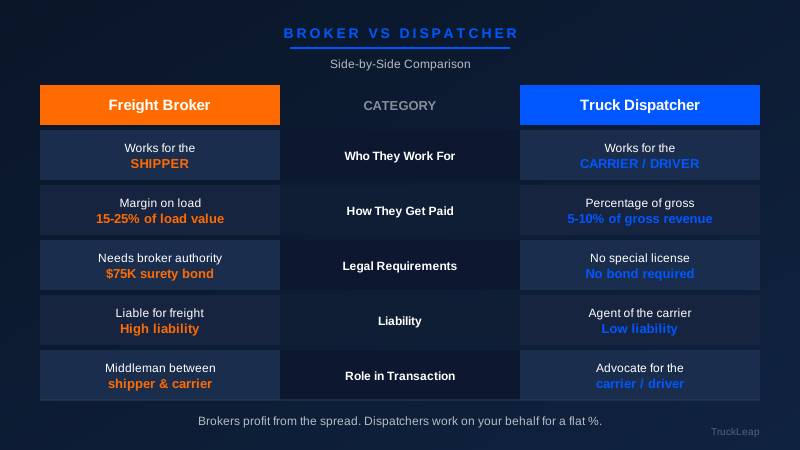
Side by Side
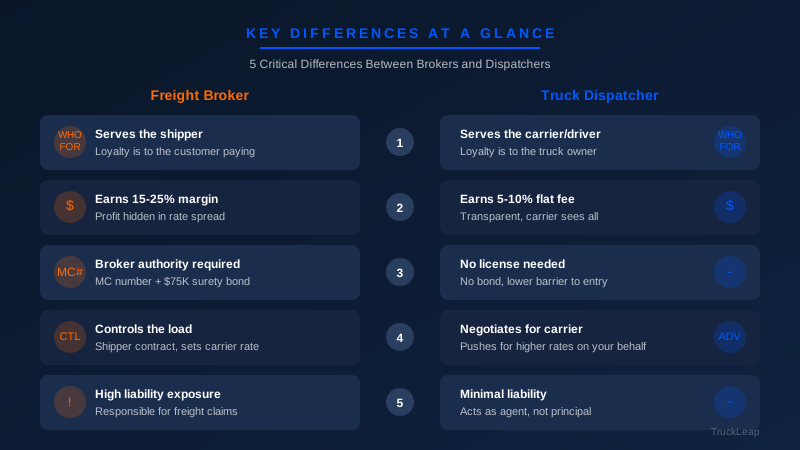
Dispatcher vs. Broker - Six Key Differences
The incentive structure is the whole story. Once you understand it, every rate conversation looks different.
Who They Represent
Freight brokers represent shippers - their job is to move freight at the lowest carrier rate their client will accept. Dispatchers represent you - their job is to get you the highest rate the market will pay.
Legal Requirements
Freight brokers need FMCSA broker authority, an MC number, and a $75,000 BMC-84 surety bond. Dispatchers operate under your carrier authority - no separate federal licensing required.
How They Make Money
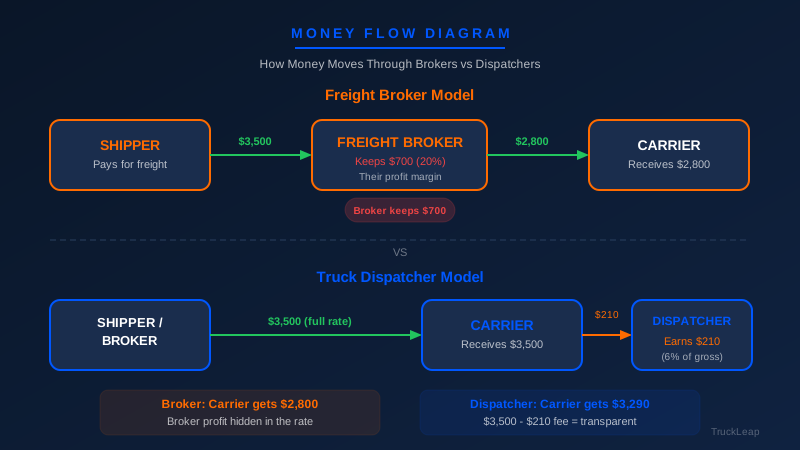
Brokers profit on the spread between what shippers pay and what they pay you. The wider the spread, the more they make. Dispatchers earn a percentage of your gross - the only way they make more is if you make more.
Who Calls Whom
Your dispatcher calls freight brokers on your behalf, negotiates rates, and presents you with confirmed loads. The broker is the middleman between you and the shipper - your dispatcher handles that relationship for you.
Liability and Authority
Brokers carry legal liability in the freight transaction as a party to the shipper-carrier contract. Dispatchers are agents acting under your authority - legal liability for the freight stays with the carrier and shipper.
When You Need Each
You need freight brokers to access shipper freight - that's their function. You need a dispatcher to negotiate with those brokers from a position of information and relationships, without spending 50 hours a month doing it yourself.
Free Tools
Know Your Numbers Before You Haul
Understanding the Difference
Freight Broker vs. Truck Dispatcher: Incentives, Fees & Who Profits
Start with the money structure, because it explains everything else. A freight broker profits on the spread - what the shipper pays minus what you get. Industry data puts average broker margins at 10–18% of total load value. The shipper paid $2.65/mile. You got $2.20/mile. The broker kept $0.45/mile, and they weren't required to tell you any of that. The broker's financial motivation, by design, is to pay carriers as little as the market will accept. A dispatcher charges a stated percentage of your gross - 5–7%, disclosed in writing before they make a single call. The only way they make more money is if you earn better rates per mile. That's a fundamentally different relationship.
The incentive difference plays out in every rate conversation. Brokers use urgency pressure - “I need this booked in the next 10 minutes” - because urgency makes carriers accept the first number. They anchor low to test acceptance. They let load conditions surface after the rate is agreed. Experienced dispatchers know every one of these moves, recognize them immediately, and counter them with rate data and willingness to walk. Carriers who self-dispatch through public load boards without that context - or compare brokers against spot board listingswithout knowing the lane's real average - accept 15–25% below market regularly.
On the legal side: freight brokers are required to hold FMCSA broker authority and a $75,000 BMC-84 surety bond, which provides some protection if a broker goes out of business without paying you. Dispatchers have no equivalent federal requirement - they operate under your authority. That's not a problem by itself, but it does mean vetting matters. Before you work with any dispatcher, get a written service agreement, check their carrier references - especially from solo owner-operatorson your equipment type - and make sure they're clearly acting as your agent rather than also running a brokerage with a conflict of interest built in.
- Broker incentive: pay carriers as little as possible to keep the spread (10–18% of load value)
- Dispatcher incentive: get carriers paid as much as possible (they earn % of what you earn)
- Broker licensing: FMCSA broker authority required + $75,000 BMC-84 surety bond
- Dispatcher negotiation: real-time rate data and broker experience beats spot board guesswork
- Watch for: some people calling themselves dispatchers also hold broker authority - verify in writing
Deep Dive
How Each Side Actually Makes Money
Both freight brokers and truck dispatchers connect trucks with loads. Both make phone calls, negotiate rates, and handle paperwork. The difference is who they work for - and once you understand how each one earns their fee, the negotiation dynamics on every single load make a lot more sense.
How Freight Brokers Make Money
Freight brokers are licensed by the FMCSA with a Property Broker Authority and a $75,000 BMC-85 surety bond. They act as intermediaries between shippers who need freight moved and carriers who can move it.
Here's the basic flow:
- 1Shipper calls broker: "I need a 44,000-lb shipment of machine parts moved from Chicago to Atlanta by Wednesday."
- 2Broker agrees to a rate with the shipper - say $3,200 all-in.
- 3Broker posts the load on DAT or calls carriers directly.
- 4Broker negotiates with carriers to take the load for as little as possible - say $2,600.
- 5Broker keeps the spread: $600 (about 18.75% margin).
The broker's revenue is the margin between what the shipper pays and what the carrier gets. The less you get paid, the more they keep. It's not predatory - it's just how the market works. But understanding this is exactly why you should never accept a broker's first offer, and why having a dispatcher counter-negotiate changes the math significantly.
How Truck Dispatchers Make Money
Dispatchers are not federally licensed as a class (laws vary by state). They work directly for carriers under a service agreement. Because their fee scales with yours, they have a direct financial incentive to push rates up rather than down.
- 1You sign an agreement with the dispatcher at 5-7% of gross revenue.
- 2Dispatcher accesses load boards, calls broker contacts, and sources loads matching your equipment and lanes.
- 3Dispatcher negotiates the highest rate possible - their fee is a % of your gross, so they earn more when you earn more.
- 4Dispatcher confirms the load with you before committing. Nothing books without your approval.
- 5Dispatcher handles carrier packet, rate confirmation, and check calls.
- 6You haul the load. Dispatcher invoices their percentage after you've been paid.
When You Work With Both at the Same Time
This is the normal situation. Almost every owner-operator interacts with freight brokers, whether they use a dispatcher or not. The chain looks like this:
Shipper → Freight Broker → [Your Dispatcher] → You (Carrier)
Your dispatcher is negotiating with the broker on your behalf. The broker still earns their spread from the shipper. Your dispatcher earns their percentage from you. You drive the load. Multiple parties in the chain doesn't mean rates are worse for you - it means you have a professional representing your interests in the negotiation rather than facing it alone. Run any presented load through our load profitability calculator before saying yes.
Conflicts of Interest to Watch For
Dispatcher who also operates a brokerage
Some companies run both a freight brokerage and a dispatch service. They could route shipper freight through their brokerage to their dispatch clients at rates that benefit the brokerage margin rather than maximizing your rate. Ask directly: do you route loads through your own brokerage? How do you ensure rates are market and not set to benefit your brokerage side?
Dispatchers taking kickbacks from brokers
Less common, but it happens. A dispatcher who steers your truck to certain brokers regardless of rate quality may have a financial relationship with those brokers outside your service agreement. Warning sign: your dispatcher always uses the same 2-3 brokers even when load boards show better rates elsewhere.
Brokers posing as dispatchers
Some freight brokers market to carriers as "dispatch services" to collect fees from both sides - charging the shipper their brokerage margin AND charging you a dispatch percentage. This double-dipping is unethical and, depending on FMCSA rules, potentially illegal. Ask any dispatch service directly: are you operating as a licensed freight broker, and do you earn any revenue from the shipper side of loads you book for us?
The Regulatory Difference
Freight brokers must be registered with FMCSA, hold a Motor Carrier Operating Authority as a Property Broker, maintain a $75,000 BMC-85 surety bond or trust fund, and file required reports.
Dispatchersare not federally regulated as a specific class. FMCSA rules don't require dispatcher licensing - which means anyone can call themselves a truck dispatcher. That's exactly why vetting your dispatcher matters more than vetting a broker. Ask for client references and verify they've been operating for at least 12-18 months. Get a written service agreement with clear fee structure, and confirm they're not also operating a brokerage.
Common Questions
Frequently Asked Questions
Dispatch vs Broker
What Carriers Say About Going Direct
Why working with a dispatcher beats hunting brokers solo.
“I like that TruckLeap is transparent. They send me the original Rate Con from the broker every time so I know exactly what the gross is. No hidden percentages, just honest dispatching for a fair fee.”
Khalid A.
Columbus, OH
2023 Volvo · dry van“I've tried three different dispatch services this year. TruckLeap is the only one that doesn't take 'no' for an answer from brokers. They negotiated an extra $400 on a cross-country run because of the fuel price spike. They pay for themselves.”
Monica D.
Charlotte, NC
Dry van · O/O“I've been with TruckLeap for 6 months. Best thing is their TONU policy. Had a broker cancel at the dock in Ohio; my dispatcher fought and got me $250 for the wasted miles before I even left the gate. They don't let brokers walk over you.”
Igor M.
Chicago, IL
2022 Freightliner · 53' dry vanWork with Someone Whose Paycheck Depends on Getting You More
Apply in 5 minutes. We work for you - not for shippers, not for brokers. Our fee goes up when your rate goes up.
Apply Now - Free Setup