
Amazon ships more packages than any other retailer in the United States, which means it generates an enormous volume of freight that needs to move between fulfillment centers, sortation facilities, and delivery stations. Amazon Relay is the program that connects owner-operators and small fleets to that freight, bypassing traditional brokers and offering direct payment from Amazon.
The pitch is compelling: consistent volume from one of the largest shippers in the world, fast payment, and no broker taking a cut. The reality is more nuanced. Amazon Relay has genuine advantages and genuine frustrations, and whether it's worth it for your specific operation depends on factors most reviews don't address honestly.
Here's the full picture.
What Is Amazon Relay?
Amazon Relay is Amazon's proprietary carrier network program. Enrolled carriers use the Amazon Relay app to see available loads, accept loads, track freight, and receive payment, all directly with Amazon rather than through an intermediary broker.
Amazon's freight is primarily line-haul loads between its logistics facilities: fulfillment centers (FCs), sortation centers (SCs), and delivery stations (DSs). These are primarily trailer drop loads (you drop an Amazon trailer at a facility and pick up another) rather than live-load operations.
What Amazon Relay is NOT:
- It is not last-mile delivery (that's handled by Amazon's DSP program for delivery vans)
- It is not Amazon's Flex program (that's for individual package delivery in personal vehicles)
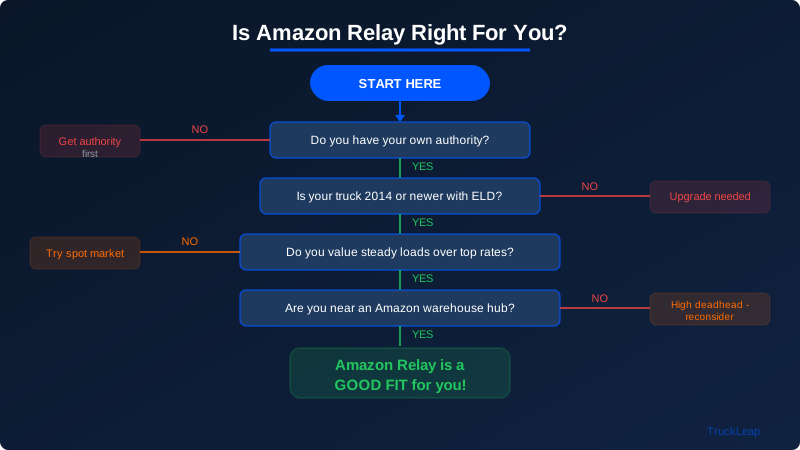
- It is not available to owner-operators leased to another carrier under their authority. You need your own active MC Number
Requirements to Join Amazon Relay
Amazon vets carriers carefully. To enroll, you'll need:
Operating Authority:
- Active MC Number (FMCSA operating authority)
- At least 90 days of operating history with your current authority
- Satisfactory FMCSA safety rating (or no rating, which is common for newer authorities)
Insurance:
- Commercial auto liability: $1,000,000 minimum
- Cargo insurance: $100,000 minimum
- Amazon requires to be listed as certificate holder on your insurance
Equipment:
- Amazon typically provides the trailer (drop-and-hook model)
- You need a power unit (semi-truck) capable of pulling 53-foot trailers
- Your truck must meet Amazon's safety standards
Compliance:
- Clean MVR (Motor Vehicle Record) for all drivers
- ELD compliance required
- App-based operations: you must use the Amazon Relay app for all load management
The application process takes 1–2 weeks. Amazon runs background checks, verifies insurance, and reviews your FMCSA record. New authorities with less than 90 days of history will need to wait before applying.
How Amazon Relay Loads Work
Once enrolled, here's the operational flow:
- Browse available loads in the Amazon Relay app. Loads show pickup location, delivery location, appointment time, and rate.
- Accept loads at least 2 hours before pickup window (earlier is better for high-demand facilities).
- Check in at the pickup facility via the app when you arrive. Amazon's facilities use geofencing, so you need to be physically on-site for the check-in to register.
- Drop and hook: At most facilities, you drop your empty trailer and pick up a loaded one. No waiting for loading (usually). This is one of Amazon's genuine operational advantages.
- Deliver to the destination facility and drop the trailer.
- Get paid: Amazon pays fast, typically within 1–5 days of delivery confirmation via ACH. No 30-day waits.
The Rates: What Amazon Relay Actually Pays
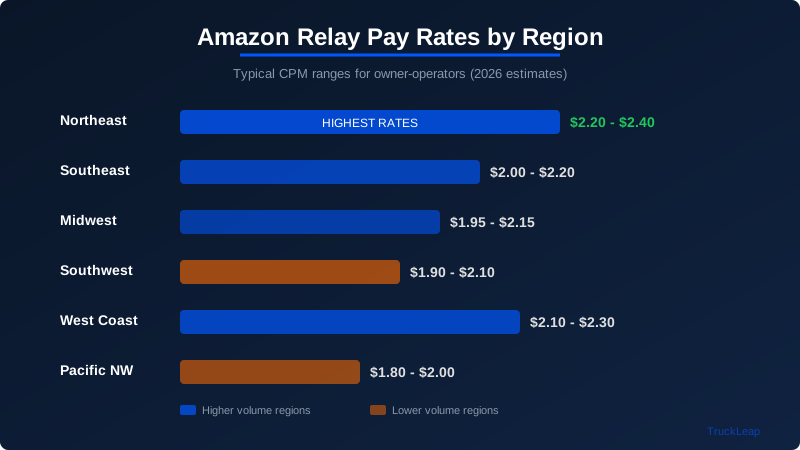
This is where honest reviews matter most. Amazon Relay rates in 2026 typically range from $1.80 to $2.40/mile on most loads. Specific characteristics:
- Rates are non-negotiable. What Amazon posts is what Amazon pays. There's no broker to call and negotiate with.
- Rates do not typically adjust with fuel prices. Amazon's fuel surcharge structure is built into the posted rate but doesn't float dynamically with diesel prices. When fuel costs surge, your effective margin on Amazon loads compresses.
- Regional variation is significant. Loads in high-cost areas (California, Northeast) sometimes post higher rates; loads in lower-cost corridors (Southeast, Midwest) tend toward the lower end of the range.
- Short hauls are proportionally worse. A 150-mile load at $1.90/mile generates $285 but may require 4–6 hours of your day when accounting for drive time and facility check-in.
Before accepting any Amazon Relay load, run it through TruckLeap's load profitability calculator. The posted rate may look adequate on the surface but include the deadhead to the pickup facility, your actual fuel cost, and your time cost. Some Amazon loads are genuinely profitable; others are breakeven at best.
The Genuine Advantages of Amazon Relay
Consistent Volume
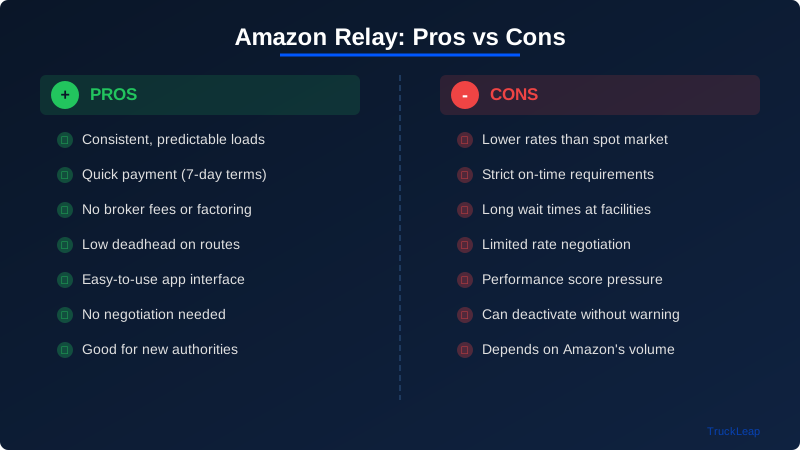
Amazon ships every day of the year. Peak season (October–January) generates enormous volume that can keep a carrier fully loaded. Even in slower freight markets, Amazon's volume remains relatively stable. The company's logistics needs don't disappear in a soft market.
This consistency is valuable. An owner-operator who relies 40–50% on Amazon Relay for load volume has a baseline that doesn't evaporate when spot rates drop.
Fast Payment
Amazon's payment speed is one of its best features. Getting paid in 1–5 days versus waiting 30–45 days for broker payment eliminates a significant cash flow burden. If you're not using factoring and are managing cash flow carefully, Amazon's payment speed is a real operational advantage.
Drop and Hook Efficiency
Amazon's drop-and-hook model means minimal dock time. You drop, you hook, you go. In a business where time is money, eliminating 2–4 hours of live-load waiting per load is genuinely valuable. If you want consistent power-only trailer pool work beyond Amazon, TruckLeap's power only dispatch service connects carriers with major retailers using the same drop-and-hook model. Use TruckLeap's profit calculator to model how improved utilization affects your monthly take-home.
No Broker Margin
You're getting paid directly without a broker taking 15–25%. On a $2.10/mile load, you're receiving $2.10/mile, whereas a broker presenting the same freight might offer you $1.70/mile after their cut.
App-Based Simplicity
The Amazon Relay app is well-designed by trucking technology standards. Load search, acceptance, navigation, and payment tracking are all in one place. For owner-operators who want simplicity in their load management workflow, this is a genuine plus.
The Real Frustrations of Amazon Relay
Rigid Pickup Windows
Amazon operates on precise appointment scheduling. Missing your pickup window, even by 30–45 minutes, registers as a missed appointment and negatively impacts your carrier score. A low carrier score reduces your access to loads and can result in suspension from the program.
The problem: Amazon's facilities are notoriously congested. You may arrive on time and still be unable to check in because the facility is backed up. The score impact still applies in many cases. Carriers who run Amazon Relay need to account for facility delays in their scheduling and build in buffer time, which means running fewer loads per day than in an ideal scenario.
Below-Market Rates on Premium Lanes
Amazon's posted rates don't respond dynamically to market conditions. During produce season, during retail peak, or during weather-related capacity tightness, spot market rates can surge well above Amazon's standard rates. You're leaving money on the table if you're fully committed to Amazon Relay during rate spike periods.
The smart approach: treat Amazon Relay as a volume-filler and baseload source, not as your only freight source. Use higher-margin loads from brokers or direct shippers to capture rate spikes.
Score-Based Access Creates Anxiety
Amazon scores carriers on on-time performance, scan compliance, and other metrics. A bad week can cost you access to the best loads or, in extreme cases, access to the program entirely. For some carriers, the management overhead of maintaining a high Amazon score is more stress than it's worth.
Limited Equipment Variety
Amazon Relay is primarily dry van. If you run reefer, flatbed, or specialized equipment, your options within Relay are limited. The program doesn't offer meaningful freight for carriers outside dry van.
Who Should Use Amazon Relay
Good fit:
- Dry van owner-operators with newer authorities who need consistent volume while building direct shipper relationships
- Carriers in regions with dense Amazon logistics infrastructure (major metro areas, Northeast, Southeast)
- Operators who value payment speed and operational simplicity over maximum rate per mile
- Carriers using Amazon as 30–50% of their load volume rather than 100%
Poor fit:
- Reefer, flatbed, or specialized carriers
- Owner-operators in rural areas far from Amazon facilities
- Carriers whose primary goal is maximum rate per mile
- Operators who can't tolerate score-based restrictions on their access to loads
Amazon Relay vs. Professional Dispatch: An Honest Comparison
| Factor | Amazon Relay | Professional Dispatch |
|---|---|---|
| Rate per mile | $1.80–$2.40/mile | Variable, often $2.20–$3.00+ |
| Rate negotiation | None | Dispatcher negotiates on your behalf |
| Load consistency | High | Variable, depends on dispatcher |
| Payment speed | 1–5 days | Load-dependent (factoring available) |
| Equipment types | Dry van primarily | All equipment types |
| Flexibility | Low (rigid windows, score system) | Higher |
| Cost | No subscription fee | 5–7% of gross |
Many experienced owner-operators use both: Amazon Relay for baseload volume and consistent pay, combined with a professional dispatch arrangement for higher-rate loads. TruckLeap's dispatch service can work alongside your Amazon Relay loads. We focus on finding you the high-rate freight while Relay fills the calendar. View our pricing or apply here.
Getting Started with Amazon Relay
- Visit relay.amazon.com and create a carrier account
- Gather required documents: MC Number, DOT Number, insurance certificates, W-9
- Complete the carrier application (1–2 weeks processing)
- Download the Amazon Relay app once approved
- Complete orientation materials within the app
- Browse and accept your first loads
Before going fully operational on Amazon Relay, calculate your break-even fuel cost using TruckLeap's fuel cost calculator and set a minimum rate floor for the loads you'll accept. Even within Amazon's platform, some loads are better than others, and having a clear minimum keeps you from accepting loads that don't cover your costs.
Frequently Asked Questions
Does Amazon Relay work for owner-operators with newer authorities?
Yes, with a caveat: Amazon requires a minimum of 90 days of operating history under your current MC Number. If you're brand new, you'll need to build initial operating history through other channels first. After 90 days, you can apply.
Can I be leased to another carrier and still use Amazon Relay?
No. Amazon Relay requires you to operate under your own authority. If you're leased to another carrier and operating under their MC Number, you're not eligible for Amazon Relay as an independent carrier.
How does Amazon Relay's fuel surcharge work?
Amazon builds a fuel component into its posted rates but it doesn't adjust dynamically with current diesel prices the way traditional fuel surcharge programs do. This means your effective margin on Amazon loads varies with fuel prices. Always verify profitability at current fuel prices using TruckLeap's fuel cost calculator before committing to a load.
What happens if I miss an Amazon pickup appointment?
Missing a pickup appointment negatively impacts your carrier score. Multiple misses can restrict your access to loads or result in program suspension. If you know you'll be late, communicate through the app as soon as possible. Amazon monitors communication responsiveness and it's factored into your score.
Is Amazon Relay available in all states?
Amazon Relay is available wherever Amazon has logistics facilities, which covers most major U.S. markets. Rural areas far from Amazon infrastructure will have limited load availability. Urban and suburban carriers in the Northeast, Southeast, Midwest, and Pacific Coast tend to see the most load volume.